Blog Details
Diskava. Beta. Kava
01Nov
Motor Insurance in Kenya: 14 Types of Cover Explained | Imana
Comprehensive, third party, PSV, matatu, boda boda, fleet, COMESA Yellow Card and more. Compare motor insurance quotes in Kenya and pay via M-Pesa.
comprehensive car insurance Kenya, third party insurance Kenya, PSV insurance Kenya, matatu insurance, boda boda insurance, tuk tuk insurance, fleet insurance Kenya, COMESA Yellow Card Kenya, buy motor insurance online Kenya, motor insurance claims Kenya, car insurance Nairobi
Which motor insurance do you need in Kenya?
The right motor insurance in Kenya depends on what your vehicle does. Every vehicle on a Kenyan road must have at least third party cover, but a private car, a matatu, a boda boda and a delivery truck each need a different policy.
Using the wrong class of cover is one of the most common reasons claims run into trouble. A private car policy, for example, is not designed for a car that carries paying passengers.
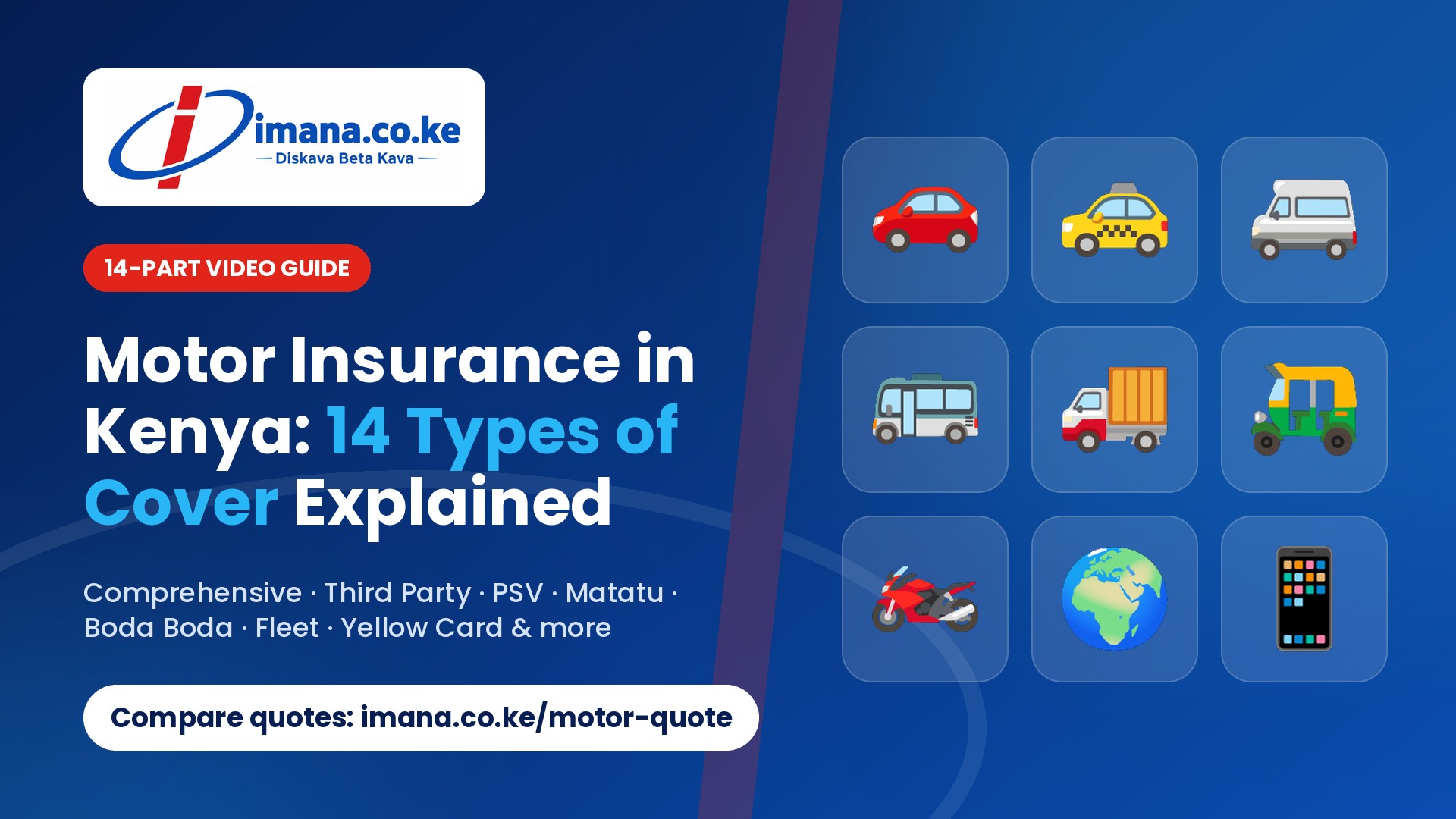
To make this simpler, Imana Insurance Agency in Westlands, Nairobi, created a 14-part video series. Each 30-second video explains one type of motor cover in plain language. This guide brings all 14 together, with a short explanation of who each cover is for and what it typically includes.
In short, here are the 14 topics covered:
- Comprehensive motor insurance
- Third party insurance
- PSV taxi insurance
- PSV matatu and bus insurance
- Private car insurance
- School bus insurance
- Institutional vehicles insurance
- Commercial vehicle insurance
- Fleet motor insurance
- Tuk-tuk insurance
- Motorcycle (boda boda) insurance
- COMESA Yellow Card
- Buying motor insurance online
- Making a motor insurance claim
Cover for personal vehicles
1. Comprehensive motor insurance
Comprehensive motor insurance covers damage to your own vehicle as well as the injury or damage you cause to other people. It is the widest form of motor cover available in Kenya.
A typical comprehensive policy includes accident damage to your car, theft and fire, third-party injury and property damage, and windscreen and radio cover within policy limits. It suits anyone whose car would be costly to repair or replace, and most banks and asset financiers require it on financed vehicles.
2. Third party insurance
Third party insurance is the minimum motor cover required by law in Kenya under the Insurance (Motor Vehicles Third Party Risks) Act. It pays for injury, death or property damage you cause to other people.
Third party cover does not pay for damage to your own vehicle. It is usually the lowest-cost option and can suit older vehicles of low value. If you want your own car protected, comprehensive cover is the better choice.
5. Private car insurance
Private car insurance is for personally-owned vehicles used for family, social and commuting purposes. You can choose comprehensive or third party cover.
Common benefits include accident, theft and fire cover, plus windscreen and entertainment system cover. Popular add-ons in Kenya include excess protector, political violence and terrorism (PVT) cover, and a courtesy car while yours is being repaired. Availability of add-ons depends on the insurer.
If your private car is also used for ride-hailing or any paid passenger work, it needs PSV cover instead (see topic 3).
Cover for public service and commercial vehicles
3. PSV taxi insurance
PSV taxi insurance covers cars that carry paying passengers, including taxis and ride-hailing (app-based) vehicles. A private car policy does not cover hire and reward use.
Cover typically includes passenger legal liability, third-party injury and property damage, and own damage, fire and theft on a comprehensive policy. Some insurers offer extras such as loss of use while the car is off the road.
4. PSV matatu and bus insurance
Matatu and bus insurance is PSV cover for vehicles that carry the public on fixed routes. It protects owners, passengers and other road users.
Policies typically cover passenger legal liability, third-party injury and property damage, and own damage, fire and theft. Options are available for individual owners and for SACCOs insuring several vehicles.
6. School bus insurance
School bus insurance is specialised cover for buses and vans that carry learners and staff. It applies on daily routes and on school trips.
Cover typically includes learners and staff as passengers, third-party injury and property damage, and own damage, fire and theft. Schools should review cover before each term, especially when adding vehicles or routes.
7. Institutional vehicles insurance
Institutional vehicles insurance covers vehicles owned by organisations rather than individuals: churches, hospitals, NGOs, colleges and similar bodies.
Typical benefits include staff and members as passengers, third-party liability, and own damage, fire and theft. Ambulances and other special vehicles can be covered on request.
8. Commercial vehicle insurance
Commercial vehicle insurance covers lorries, pick-ups, vans and delivery vehicles used to earn a living. Private car cover does not apply to business haulage.
Policies typically cover own damage, fire and theft, and third-party injury and property damage. Insurers distinguish between carrying your own goods and general cartage for others, and goods in transit cover can be added.
9. Fleet motor insurance
Fleet motor insurance puts several company vehicles under one policy, from as few as five to several hundred. It means one renewal date and less paperwork.
A fleet policy can mix cars, vans and trucks. Premiums are usually based on the fleet's claims record, and larger fleets often get dedicated account support.
10. Tuk-tuk insurance
Tuk-tuk insurance covers three-wheelers that carry passengers or goods. For many owners, the tuk-tuk is their main source of daily income.
Cover typically includes passenger legal liability, third-party injury and property damage, and own damage, fire and theft on a comprehensive policy. Options are available for individual owners and SACCOs.
11. Motorcycle (boda boda) insurance
Motorcycle insurance covers both commercial boda bodas and private motorcycles, including electric bikes. Third party cover is required by law.
Commercial boda policies include pillion passenger liability. Riders can also add own damage, fire and theft cover, and rider personal accident cover as an add-on.
Cross-border cover, buying online and claims
12. COMESA Yellow Card
The COMESA Yellow Card is a regional motor insurance certificate that gives Kenyan vehicles third-party cover in participating countries, including Uganda, Tanzania and Rwanda.
It covers third-party liability abroad and medical expenses for the driver and passengers. It is available for short trips or long-haul transport, and you should arrange it before you reach the border. Your Kenyan motor policy stays in place for cover at home.
13. How to buy motor insurance online in Kenya
You can compare and buy motor insurance online in Kenya in about a minute through the Imana motor quote page at imana.co.ke/motor-quote.
The process takes four steps:
- Pick your cover type (comprehensive or third party) and vehicle category.
- Enter your vehicle details: make, model, value and year of manufacture.
- Compare quotes from Kenya's leading insurers side by side.
- Pay using Lipa na M-Pesa.
The comparison is sent to your email. The quote page currently covers cars, motorbikes (including electric models) and tuk-tuks; for PSV, school, institutional and fleet cover, contact the team directly.
14. How to make a motor insurance claim in Kenya
After an accident, quick and correct reporting helps your claim move faster. Follow these four steps:
- Stay safe, then report the accident to the nearest police station and get a police abstract.
- Take photos of the scene and vehicles, and collect the other driver's and witnesses' details.
- Notify Imana and your insurer as soon as possible, using imana.co.ke/claims-request.
- Imana helps you follow up with your insurer until the claim is concluded.
Claims are assessed and settled by the insurer under the terms of your policy. Do not admit liability or agree to private settlements at the scene.
Frequently asked questions
Is third party insurance mandatory in Kenya? Yes. Every motor vehicle used on a public road in Kenya must have at least third party cover under the Insurance (Motor Vehicles Third Party Risks) Act.
What is the difference between comprehensive and third party insurance? Third party cover pays for injury or damage you cause to others. Comprehensive cover does the same and also covers damage to, or theft of, your own vehicle.
Can I use private car insurance for Uber or Bolt? No. A car that carries paying passengers needs PSV taxi insurance. A private car policy does not cover hire and reward use.
Do boda boda riders need insurance? Yes. Third party cover is required by law, and commercial bodas also need pillion passenger liability cover.
What is a COMESA Yellow Card used for? It gives your Kenyan vehicle third-party motor cover, plus medical expenses for driver and passengers, when driving in participating countries such as Uganda, Tanzania and Rwanda.
Can I buy motor insurance online and pay with M-Pesa? Yes. At imana.co.ke/motor-quote you can compare quotes from leading insurers and pay via Lipa na M-Pesa.
What should I do first after an accident? Stay safe, report to the police, take photos and collect details, then notify your insurer as soon as possible through imana.co.ke/claims-request.
Where is Imana Insurance located? Imana Insurance Agency Kenya Ltd is on the 4th Floor, Krishna Centre, Woodvale Grove, Westlands, Nairobi.
Get your motor insurance quote
Whatever you drive, the right cover starts with an honest comparison. Imana compares quotes from Kenya's leading insurers and helps you when it is time to claim.
- Get a quote in minutes: imana.co.ke/motor-quote
- WhatsApp: +254 796 209 402
- Call: +254 113 619 635
- Email: insurance@imana.co.ke
Watch the full 14-part video series on the Imana Insurance Facebook and Instagram pages.
Terms, conditions and exclusions apply. Benefits vary by insurer and policy.