Blog Details
Diskava. Beta. Kava
11May
Is Microhealth the Future of Health Insurance in Kenya?
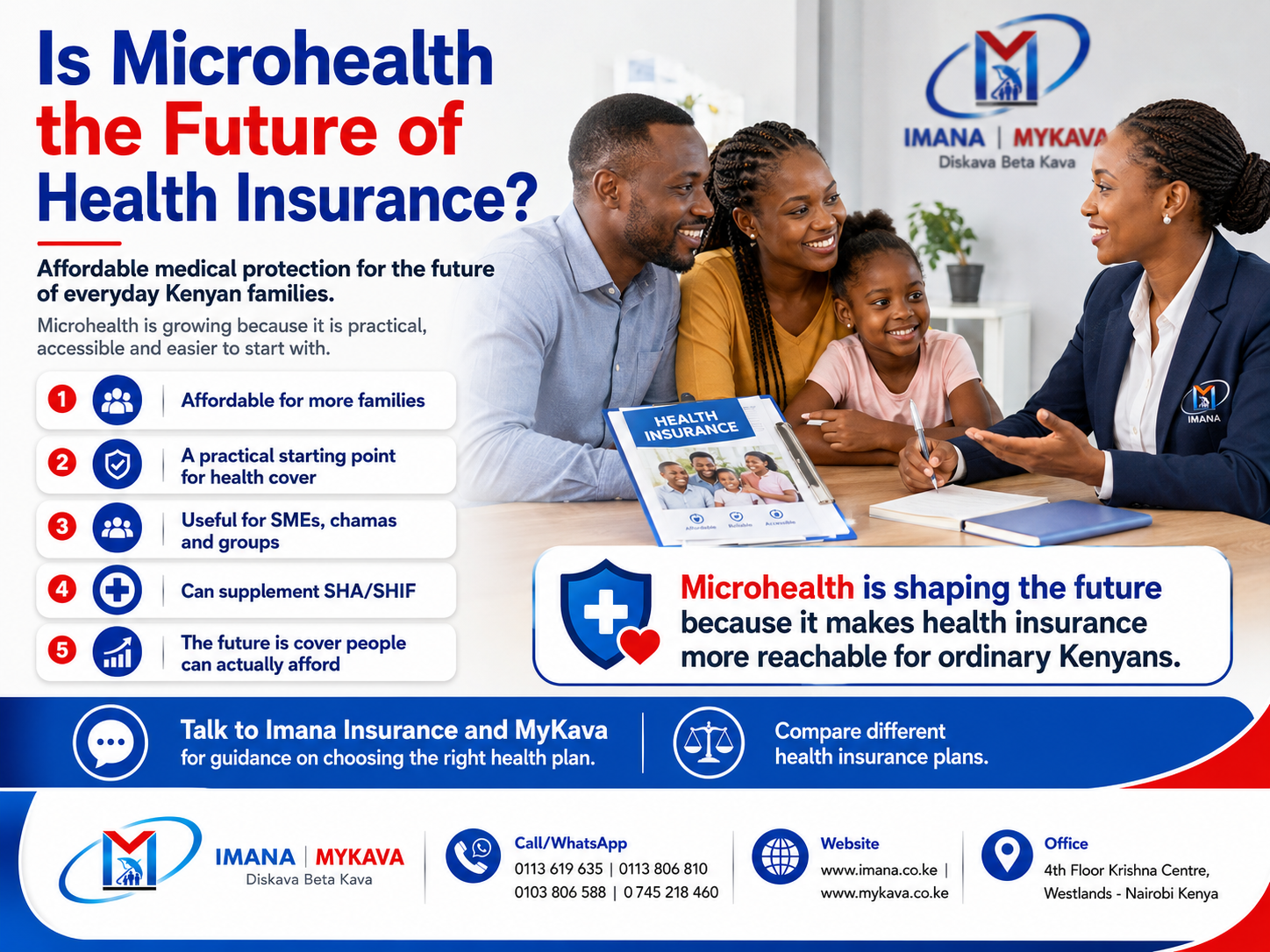
Yes — microhealth insurance is likely to become a very big part of the future of health insurance in Kenya, especially for ordinary families, SMEs, chamas, welfare groups, self-employed people, informal workers, and young households.
But let’s say it clearly: microhealth may not replace full medical insurance completely. Instead, it will become the practical bridge between having no cover at all and having a bigger private medical insurance plan.
For many Kenyans, that bridge is exactly what has been missing.
Why Microhealth Could Shape the Future
For a long time, private medical insurance has looked like something meant for people in formal employment, corporates, or families with strong monthly income.
But Kenya’s reality is different.
Many people work in businesses, farming, boda boda, online gigs, salons, shops, transport, casual jobs, small offices, chamas, churches, welfare groups, and family setups where income is not always predictable.
So when you tell such a person to pay a very high premium for medical cover, they may admire the product — but they walk away.
Microhealth changes that conversation.
It says:
“Start with what you can afford. Get some protection now. Upgrade later when your budget allows.”
That is why it feels like the future.
1. It Makes Health Insurance More Affordable
The biggest strength of microhealth is affordability.
Most Kenyans are not refusing medical insurance because they do not care. Many are refusing because the premium feels too heavy.
Microhealth gives people a lower-cost entry point.
It helps the public access health protection without waiting until they can afford a full, high-end medical insurance package.
That matters because one hospital admission can shake a whole family financially.
2. It Fits Both Urban and Rural Families
Microhealth is not only for Nairobi families. It can support people in towns, estates, counties, villages, and upcountry homes.
Urban families face high hospital costs.
Rural families may face referral costs when a patient must be moved to a bigger hospital.
Both families need protection.
Whether someone lives in Westlands, Umoja, Rongai, Kisumu, Eldoret, Nyeri, Kakamega, Kitale, Machakos, Meru, Mombasa, Garissa, or deep in the countryside, sickness can still come without warning.
That is why affordable health protection is not a luxury. It is becoming a basic financial planning tool.
3. It Helps Reduce Dependence on Fundraising
In Kenya, medical emergencies often become public fundraising campaigns.
A child is admitted.
A parent needs surgery.
A hospital bill grows.
A WhatsApp group is created.
Friends and relatives are asked to contribute.
There is nothing wrong with community support. It is part of who we are.
But fundraising should not be the first medical plan.
Microhealth helps families prepare before the emergency happens. It gives people a safety net, even if it is not the biggest cover in the market.
4. It Works Well With SHA/SHIF
Microhealth can also work as a supplement to public health coverage.
Many families may still use SHA/SHIF, but they may want an additional private layer for selected benefits, hospital access, inpatient support, outpatient care, or specific family needs.
This is where microhealth becomes very practical.
It does not have to compete with public health coverage. It can complement it.
The future of health insurance in Kenya may not be one single product. It may be a mix of public cover, microhealth, private medical insurance, employer schemes, and group covers.
5. It Is Easier for Groups, SMEs and Chamas
Microhealth fits the Kenyan group culture very well.
It can work for:
- SMEs
- Chamas
- Welfare groups
- Churches
- Saccos
- Boda boda groups
- Farmers’ groups
- Family groups
- Small businesses
Many groups already contribute when a member is sick. Microhealth can make that support more organized and predictable.
Instead of reacting after the hospital bill has already arrived, the group plans ahead.
That is the future: structured protection instead of panic contributions.
6. It Encourages People to Start Early
Medical insurance becomes harder and more expensive when people wait too long.
As someone grows older, premiums usually rise. Pre-existing and chronic conditions can also affect pricing, waiting periods, exclusions, or acceptance terms.
Microhealth encourages people to enter the health insurance space early.
A young family can start small.
A self-employed person can start small.
A chama can start small.
A small business can start small.
Then later, they can upgrade to a stronger medical plan when income improves.
7. It Speaks the Language of Real Kenyan Budgets
This is where microhealth wins.
It understands that most families are balancing rent, school fees, food, transport, business stock, farm inputs, loans, emergencies, and family responsibilities.
A product that ignores that reality will struggle.
Microhealth is attractive because it is not trying to force everyone into a premium package. It gives people something more realistic.
In simple terms:
Microhealth meets people where they are.
That is why it has a future.
But Is Microhealth Enough for Everyone?
Not always.
Microhealth is useful, but it may not be enough for people who need:
- Higher inpatient limits
- Wider hospital panels
- International medical cover
- Advanced chronic condition support
- Major specialist treatment
- High maternity limits
- Premium private hospitals
- More comprehensive outpatient benefits
So, the future is not about saying everyone should only buy microhealth.
The future is about giving people choices.
Some families will start with microhealth.
Some will upgrade to family medical insurance.
Some will need senior medical cover.
Some businesses will need corporate health schemes.
Some professionals will need premium or international covers.
That is why guidance matters before buying.
Why Talk to Imana Insurance and MyKava?
At Imana Insurance Agency Kenya Ltd and MyKava Online Insurance Consultants, we help individuals, families, SMEs, chamas, and corporates compare different health insurance plans before buying.
We can guide you through:
- Microhealth insurance
- Family medical insurance
- Children’s medical cover
- Senior medical insurance
- SME and group medical cover
- Corporate medical insurance
- Inpatient and outpatient options
- Hospital panel choices
- Waiting periods and exclusions
- Chronic and pre-existing condition considerations
The goal is simple: help you buy a health plan you understand, not just a cover that looks cheap on paper.
For quotes, guidance, and health insurance options, visit:
- Imana Health Insurance: https://imana.co.ke/insurance/imana-health
- Health Insurance in Kenya: https://imana.co.ke/insurance/health-insurance
- Microhealth Quote: https://imana.co.ke/micro-quote
- Corporate Medical Quote: https://imana.co.ke/corporate-quote
- Last Expense Quote: https://imana.co.ke/last-expense-quote
- Contact Imana: https://imana.co.ke/contact-us
- MyKava Online Insurance Consultants: https://www.mykava.co.ke
- Imana Insurance Agency Kenya Ltd: https://www.imana.co.ke
Insurance Wisdom
Microhealth is not just a cheap version of medical insurance.
It is a signal of where the market is going.
People want cover they can afford.
Families want protection without financial pressure.
SMEs want practical employee benefits.
Chamas and welfare groups want structured health support.
Young families want a starting point.
Rural and urban households want a safety net.
So yes — microhealth is part of the future of health insurance in Kenya.
Not because it is perfect, but because it is practical.
Start where you are. Protect what you can. Upgrade when you are able.
Talk to Imana Insurance or MyKava today and compare health insurance plans that fit your budget, your family, and your reality.
Call/WhatsApp: +254 113 806 810 | +254 103 806 588
Website: www.imana.co.ke | www.mykava.co.ke
Office: 4th Floor Krishna Centre, Westlands, Nairobi
Compare. Understand. Buy wisely. Because the future of health insurance belongs to products people can actually afford.